
Implant-supported denturesWarsaw
Modern dental prosthetics allow patients with extensive tooth loss to regain full functionality and a beautiful smile. At Nowak | Wołcz Dental Clinic in Ursynów, we offer implant-supported dentures – a solution that lets you forget about uncomfortable removable dentures and enjoy stability and the natural look of new teeth. Thanks to an individual approach, advanced technologies, and our team’s experience, we can restore quality of life even in the most difficult cases of edentulism.
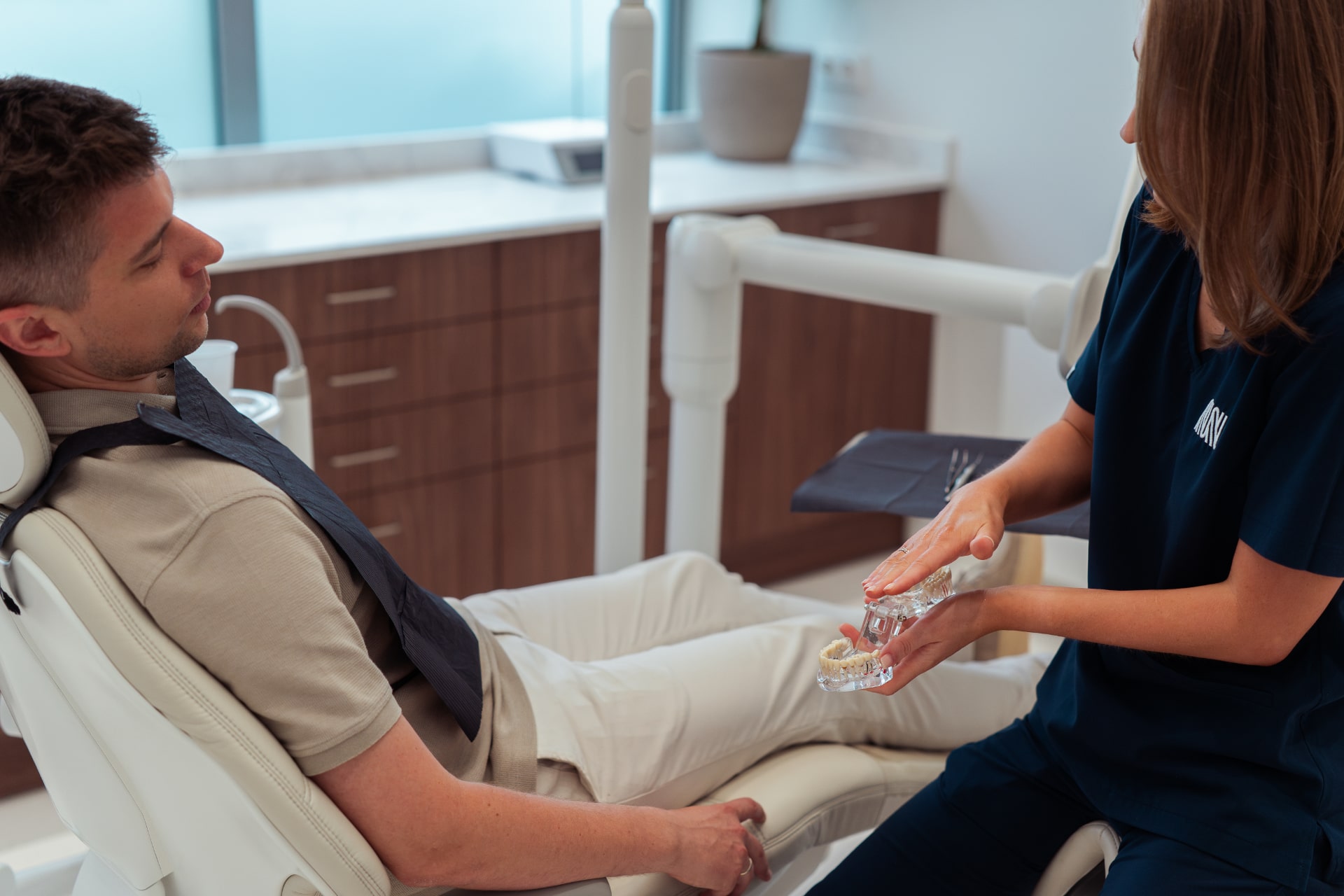
What are implant-supported dentures?
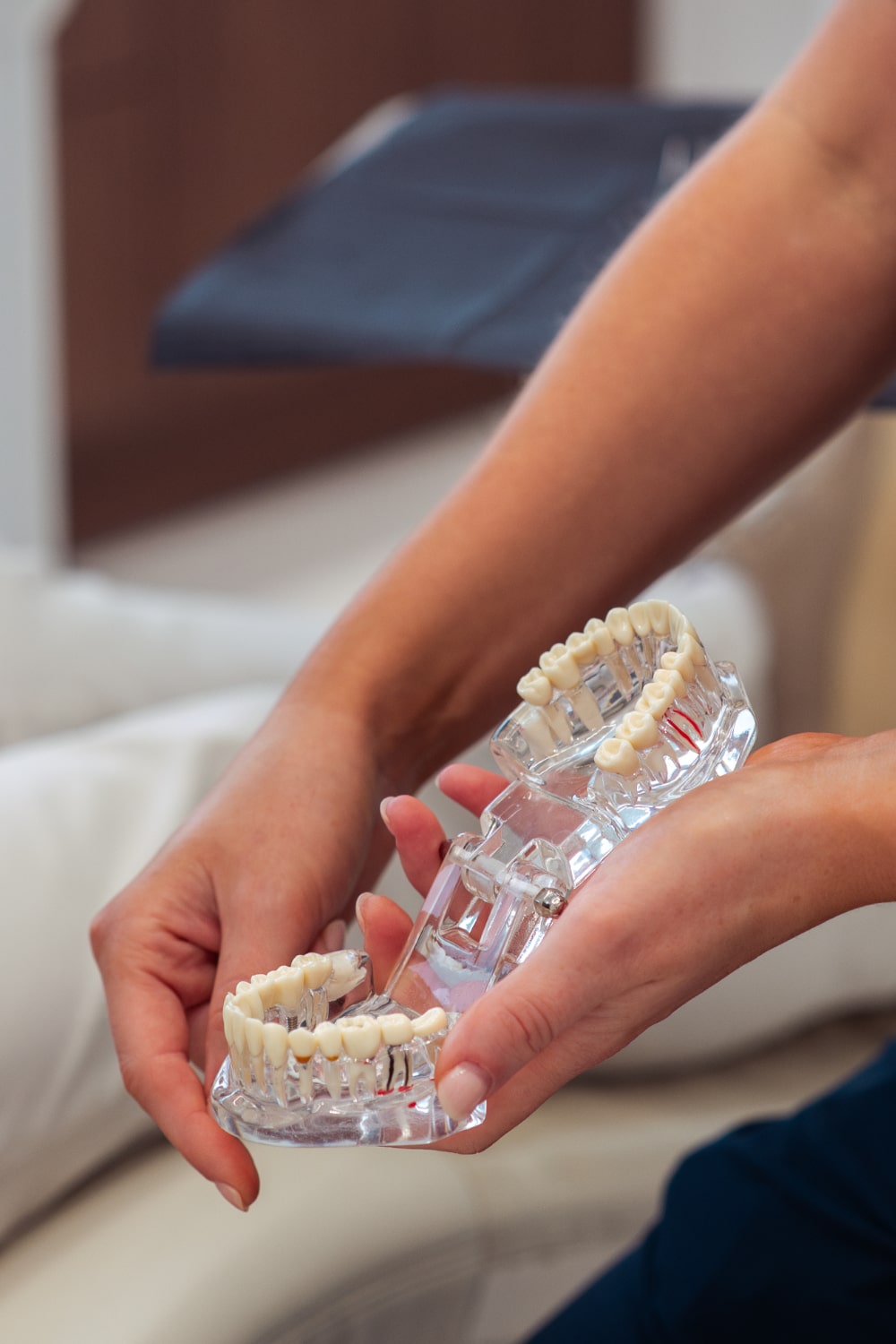
Implant-supported dentures are fixed or semi-fixed prosthetic restorations attached to several implants embedded in the bone. Unlike traditional removable dentures, which rest on the gums and can shift, implant-supported dentures are stable, do not fall out, and allow for comfortable chewing even of hard foods. Depending on the patient’s needs and anatomical conditions, various attachment systems are used – from clips and bars to completely fixed solutions. Such dentures not only improve daily comfort but also prevent bone loss and changes in facial features.
Who are implant-supported dentures for?
Implant-supported dentures are designed for individuals with total or partial tooth loss who are dissatisfied with classic removable dentures or cannot use them due to insufficient gum support. It is also an excellent solution for patients with bone loss, where traditional dentures do not provide adequate stability. We recommend implant-supported dentures to active people who value comfort, a natural appearance, and self-confidence in every situation.
How does the qualification for implant-supported dentures look?
The qualification process begins with a detailed consultation with an implantologist, who assesses the condition of the oral cavity, performs necessary imaging tests (X-ray, CT scan), and analyzes bone conditions. The doctor considers general health, lifestyle, and patient expectations. Before the procedure, information about medications taken, chronic diseases, and allergies must be provided. In some cases, preparatory procedures such as bone augmentation or treatment of inflammation may be necessary.
01 Bone condition analysis and diagnostics
Detailed imaging studies allow for planning the number and placement of implants and selecting the optimal prosthetic solution.
02 General health assessment
The doctor takes into account chronic diseases, medications, habits, and patient expectations regarding the final result.
03 Multi-stage treatment planning
If necessary, preparatory stages such as bone reconstruction or treatment of other oral conditions are implemented.
How does the treatment progress – from implantation to the new denture?
01
Implant placement
Treatment begins with placing the appropriate number of implants in designated areas of the dental arch. The procedure is performed under local anesthesia and is painless.
02
Osseointegration process
After implantation, a healing and osseointegration period follows, typically lasting 2 to 6 months – during this time, the implants fuse with the bone, creating a stable base for the future denture.
03
Denture attachment
The patient immediately regains full oral functionality and a natural-looking smile.
04
New smile
The patient immediately regains full oral functionality and a natural-looking smile.
Key advantages of implant-supported dentures
Implant-supported dentures are a solution that combines comfort, stability, and aesthetics. Here is what sets this method apart from other prosthetic restorations:
Stability even in difficult conditions
Implant-supported dentures do not shift during speaking or eating, providing self-confidence in every situation.
Bone protection and a younger facial appearance
Implants stimulate the bone, preventing its loss and volume reduction, which protects against sunken cheeks and changes in facial features.
Daily comfort of use
No pressure on the gums, elimination of gag reflexes, and the ability to enjoy favorite foods without restrictions.
Easy hygiene and maintenance
Implant-supported dentures can be easily removed for cleaning (in the case of semi-fixed solutions), and durable materials ensure longevity and aesthetics for years.
Individual fit
Each denture is custom-designed, taking into account the shape of the dental arches, color, and facial proportions of the patient.
Price list for implant-supported dentures at Nowak | Wołcz Dental Clinic Warsaw Ursynów
The price of treatment with implant-supported dentures depends on the number of implants, the type of materials used, and the individual needs of the patient. Before starting treatment, we always provide a detailed cost estimate and explain all financial aspects, including the possibility of installment payments. We invite you to contact us for an individual quote and to discuss treatment details.
Team of specialists performing prostheses on implants
At Nowak | Wołcz Dental Clinic in Ursynów, treatment with prostheses on implants is conducted by an interdisciplinary team of implantologists, prosthodontists, and dental technicians. Our doctors regularly participate in training and implement the latest global solutions to provide patients with the highest standard of care – from diagnostics to post-operative follow-up.


FAQ
Answers to unusual questions about prostheses on implants
Prostheses on implants are a topic that raises many questions going beyond standard issues. We present answers to those that appear less frequently but are equally important for patients.
01 Can I sleep with a prosthesis on implants?
In the case of fixed prostheses, there is no need to remove them for the night – they are fully integrated with the implants. For semi-fixed solutions, the doctor will advise whether and when the prosthesis should be removed for sleep.
02 How does a prosthesis on implants affect the taste and temperature of food?
Because the prosthesis does not rely on the palate, patients experience the taste and temperature of food almost the same way as people with natural teeth, which increases eating comfort.
03 Can a damaged prosthesis on implants be repaired without removing it from the implants?
Many minor repairs can be performed without the need to remove the entire prosthesis; however, more serious damage requires its disassembly and work in a prosthetic laboratory.
04 How often should the elements fastening the prosthesis to the implants be replaced?
Elements such as attachments or O-rings may wear out over time and require periodic replacement – the frequency depends on the type of system and intensity of use, but it is usually once every few years.
05 Can a prosthesis on implants be made in an immediate version?
In many cases, it is possible to provide a temporary prosthesis as early as the day of the implantation procedure; however, the final, permanent prosthesis is fitted after full integration of the implants with the bone, ensuring durability and a perfect fit.